
PRODUCT DEVELOPMENT
From idea to market: self-production and new possibilities for design
Designing an object, producing a small batch and selling directly to the public: digital tools make this route more accessible and ask designers to look beyond the product.
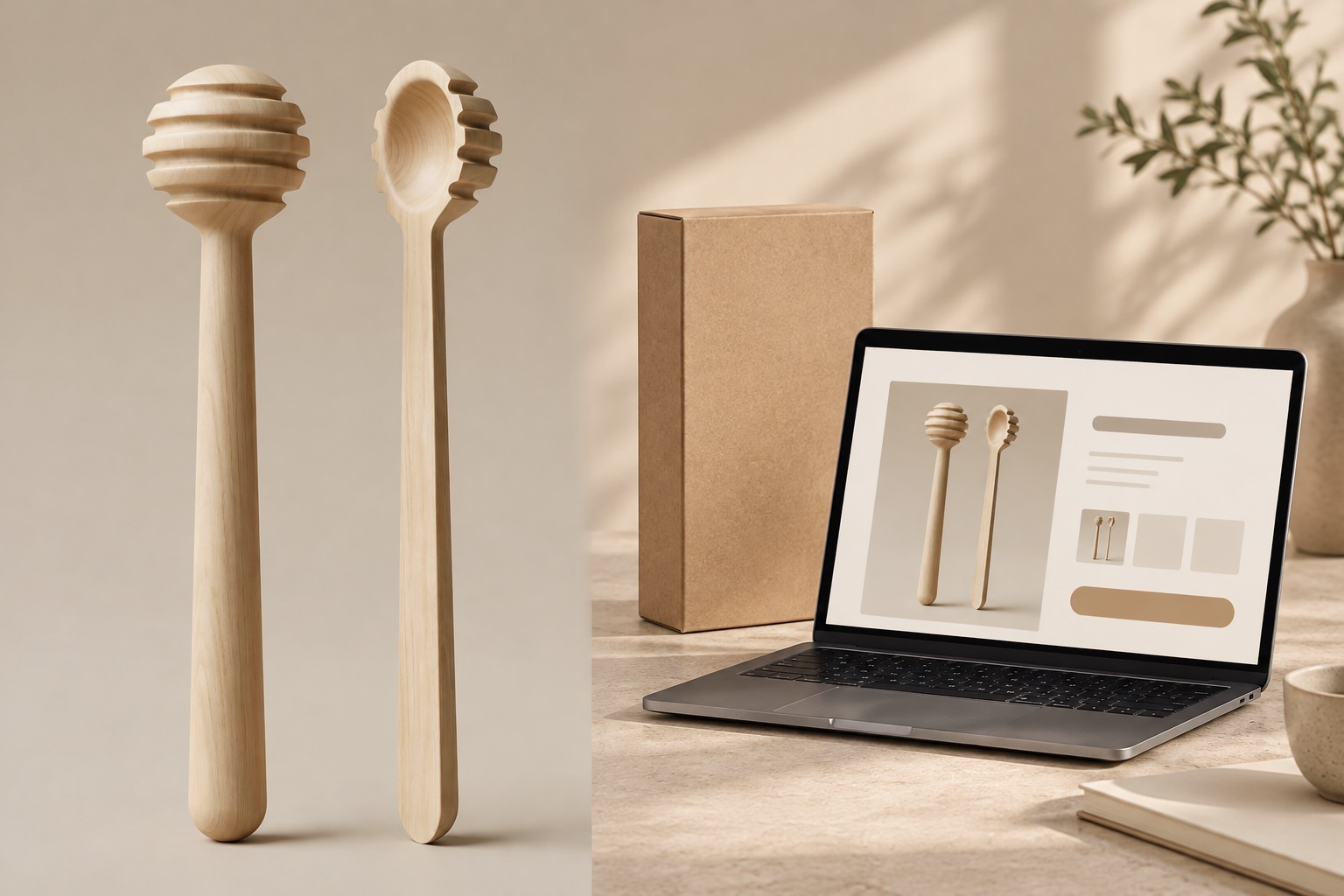
Self-production in design is an approach in which designers organise the manufacture and commercialisation of their own products, often working with independent workshops and suppliers. Digital tools can make direct sales easier; design quality, production feasibility and the relationship with the audience remain essential.
For a designer, finding a company interested in developing a project is an important route to market. Working with a manufacturer brings skills, resources and market knowledge that can make a decisive contribution to the quality of the result.
There is another possibility: taking responsibility for bringing an idea to market through self-production. This can involve a single object, a small collection or the creation of an independent brand.
Self-production has a history that long predates social media and ecommerce. What has changed is the set of tools available to present a project, help people discover it and make it available to buy. Designers can build a direct relationship with their audience, explain the decisions behind an object and organise a sales channel without waiting for every stage to be handled by a different intermediary.
This opens up interesting possibilities, especially for ideas with a clear identity that struggle to find a place in existing catalogues.
Self-production means designing everything around the object, too
The first question is whether a prototype can become a repeatable product with consistent quality and a sustainable cost. Materials, manufacturing processes, minimum quantities, lead times and supplier relationships all come into play.
Then come equally practical questions: how will it be packaged? How much space does it take up? Can it be shipped without breaking? Does the price cover packaging, order handling and possible replacements?
An object intended for direct online sales should take these considerations into account from the earliest stages. Its dimensions, number of components and ease of assembly can affect its economic viability as much as the choice of material.
In this sense, self-production expands the scope of design. The designer is shaping an experience that encompasses product discovery, purchase, delivery and use. For a closer look at budgeting, see my guide How much does it cost to develop a new product?
The role of tools such as Shopify
Platforms such as Shopify allow businesses to create an online store and manage sales across different channels. They provide a foundation for organising product presentation and the purchasing journey without developing the entire digital infrastructure from scratch. The available channels are described in Shopify’s official documentation.
As a Shopify Partner, I see these tools as a practical way to connect product development with commercialisation. A small brand can start with a focused offering, even a single well-resolved object, and build a coherent presentation around it.
The store becomes an extension of the design. Photography, copy, details and technical information should help people understand what they are buying, how they can use it and what value justifies the price.
Opening an ecommerce store is, of course, only part of the work. People need to discover it, trust it and receive what they have been promised. The platform makes sales management easier; the quality of the offering and the service remains the seller’s responsibility.
Design between trade fairs and Instagram
The way design is communicated is changing, too. Physical presentations are accompanied by ongoing communication through images, videos, interviews and social media content. In its editorial services for 2025, Salone del Mobile included videos intended for Instagram and other digital channels, as documented in its official editorial services brochure, in Italian.
In this setting, Instagram accounts and people who build an audience around design play a role in how projects are discovered and discussed. An object’s visibility can extend well beyond the event itself, through people who photograph, interpret and talk about it.
I believe this change offers opportunities, but also deserves reflection. When communication relies mainly on quickly consumed images, a product may be rewarded for its ability to attract attention before anyone encounters the qualities that emerge through use.
For designers, finding a balance becomes important: making an idea clear and engaging without allowing the search for the most striking image to govern every decision.
A construction detail, a functional solution or a manufacturing process can all make compelling content. Explaining them well gives room to qualities that are less immediately apparent than a spectacular shape.
From an audience to a real market test
For independent designer-producers, digital communication can also be a way of listening. People’s questions help reveal which aspects of a product are clear and which need a better explanation. Enquiries can highlight needs, contexts of use or variants worth exploring.
Interest, however, needs to be distinguished from willingness to buy. A popular image does not, by itself, demonstrate that an object will find buyers at the price needed to produce it.
A small production run can provide more concrete evidence: manufacturing times, delivery quality, customer response and the project’s economic viability. Starting small still requires resources, but it allows some decisions to be based on experience.
Another route for people with an idea
I see self-production as a route that can sit alongside collaboration with established companies. It can make room for experimentation, help a craftsperson develop a collection or enable a new brand to define its identity.
The starting point remains a design that meets a need and has a reason to become part of people’s lives. A coherent path needs to be built around it, from production and communication through to sales.
This is an area in which I am interested in connecting my product design skills with digital tools: helping an idea take shape in its form, function and the way it will be offered to the public.
Because the way an object reaches people deserves to be designed, too.
To begin defining your project, explore the guided Shape your idea tool or browse my design projects.