
PRODUCT DEVELOPMENT
How much does it cost to develop a new product?
Design, prototypes, tooling and production: understand the cost categories and prepare the information for a tailored quote.
How much does it cost to develop a new product? The quote depends on the starting point, the object’s complexity and the activities required. To estimate the investment, distinguish design work from prototypes, testing, tooling and production.
Fees can also be agreed through royalties and an advance, considering together how commercial risk is shared.
The useful question is not only “how much does design cost?” but “what results do I need, which checks are required and how far do I want to take development?”
Design and production are different costs
The cost of a new product can mean very different things: the fee for designing it, the cost of the first prototype or the investment needed to manufacture a series. Mixing these categories makes it difficult to judge whether the available budget is adequate.
It helps to separate four groups of activities. Not all will apply to every project, nor will they necessarily be carried out by the same party.
1. Research and design
Depending on the scope, these include brief analysis, research, concept development, 3D modelling and detail design. The quote should clarify the deliverables: presentations, digital models, drawings or other agreed outputs.
2. Prototypes and testing
Materials, fabrication, assembly and prototype tests should be assessed separately. A model for checking size and proportions has different objectives from a functional prototype or a sample made with final materials and finishes.
3. Technical development and tooling
Production drawings, specialist checks, moulds and tooling may require specific expertise and suppliers. Establish which activities are included in the designer’s scope and which need separate quotations.
4. Production and bringing the product to market
Series production costs include materials, processing, components, assembly and quality control. The overall budget may also cover packaging, transport, documentation and commercial activities. A design quote alone therefore does not represent the entire launch investment.
What affects the cost of product design?
An object’s physical size does not determine its complexity. A small accessory can require considerable work on fit, grip, assembly or compatibility with other objects.
- The starting point. An undefined need requires different work from a brief with established requirements and constraints.
- Functions. Moving parts, mechanisms and electronics introduce interactions to study and check.
- Materials and processes. A prescribed material, new technology or supplier yet to be identified can require further investigation.
- Variants and components. Developing a product family involves managing differences and shared parts.
- Required checks. Ergonomics, strength, compatibility and other requirements need appropriate tests.
- Scope of work. Stopping at the concept differs from following the project through prototypes, technical development and discussions with manufacturers.
Decision-making also matters. A change in requirements after a stage is approved can mean revising work and repeating checks. Agree on decision-makers, response times and approval procedures.
Why quantities influence design decisions
Expected quantities affect the relationship between initial investment and unit cost. A process requiring dedicated tooling can have substantial start-up costs, which must be considered against realistic production volumes.
For small batches, processes with lower initial costs may be appropriate; for larger volumes, a dedicated process may become worthwhile. There is no universal threshold: supplier quotations must reflect the geometry, material and required quality.
Selling price and distribution channel are also design inputs. They help define a target cost to check with the manufacturer and the company selling the object. The designer can compare alternatives in their economic context as well as their form.
A portfolio example: ICON
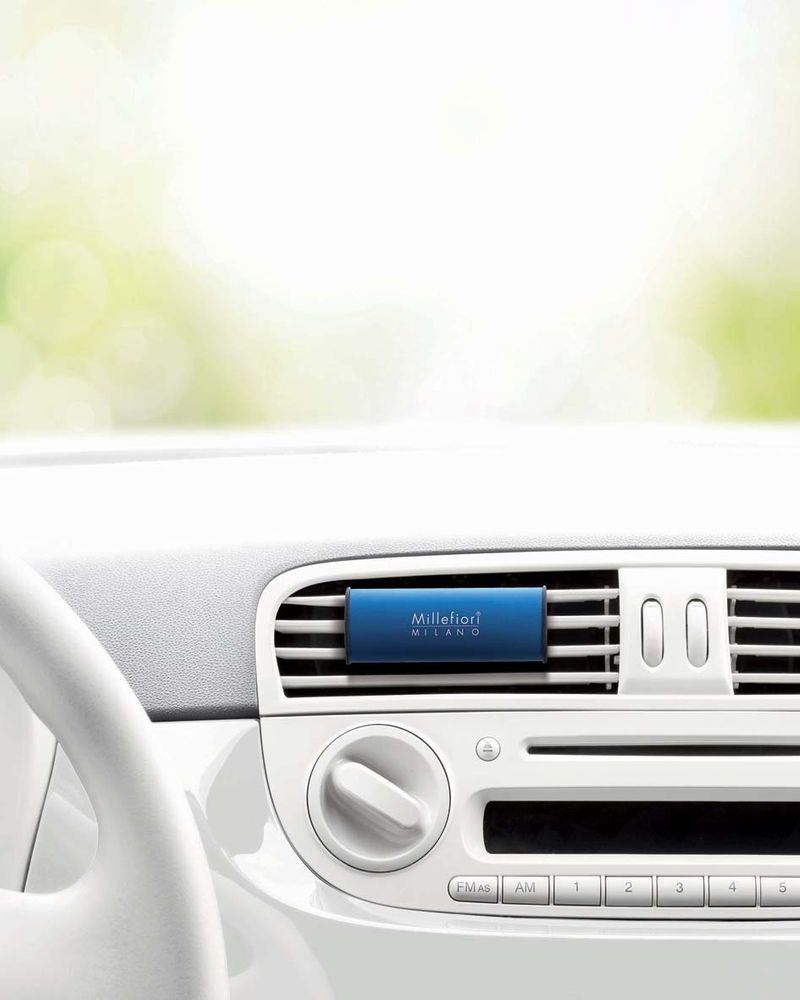
In the ICON car air freshener, the cover is retained while the fragrance refill is replaced. It illustrates how a design can separate components with different use cycles. This leads to considering the housing, refill and assembly as parts of a system.
The case illustrates a design decision, not a price benchmark. Estimating a new accessory requires specific requirements, quantities and processes.
How to compare two design quotes
Two prices are comparable only when they describe a similar scope. A proposal limited to initial design directions is not equivalent to one including modelling, prototypes and development support.
Before deciding, check that the following are explicit:
- objectives and work stages;
- number and level of detail of proposals;
- deliverables and file formats;
- included revisions and handling of additional requests;
- included or excluded prototypes, tests and supplies;
- roles of the designer, technical specialists and manufacturers;
- deadlines, approvals and payment terms.
A clear quote explains where one stage ends and what is needed to move to the next. The aim is to make the planned work visible, rather than compare the final total alone.
How to start with a limited budget
Dividing the process into stages with verifiable outcomes can help. Initial analysis can clarify requirements, challenges and possible directions before resources are committed to full development.
Another approach is to focus on essential functions and a first product configuration, postponing variants. Prototypes can also be targeted: first a model to check a gesture, then a test of a mechanism if needed.
Working in stages does not eliminate later costs. It allows you to approach them with better information and decide whether to continue, change direction or stop.
Royalties and advances: sharing risk and results
A designer’s remuneration can also be agreed through royalties: payments linked to the commercial exploitation of the design, such as a percentage of sales on a basis defined in the agreement. A mixed arrangement combining fixed and variable fees is also possible.
I often use this approach in my work. I see it as a way of sharing some of the risk and success between client and designer: the company can reduce its initial design outlay, while the designer links part of their remuneration to the product’s performance.
When initial resources are limited, this option may help a collaboration get started. It needs to be assessed together, considering the product’s prospects, the ability to manufacture and distribute it, and the commitment both parties are willing to make. Royalties concern the agreed designer’s fee; prototypes, tooling and production still need funding.
How an advance against royalties works
To provide the designer with a guaranteed initial payment, the parties can agree on an advance against future royalties. Earned royalties are then offset against the advance already paid; once that amount has been covered, further payments are made according to the agreed schedule.
For the advance to remain with the designer even if sales fall short, the agreement must specify that it is not repayable merely because expected sales are not achieved. An advance recoupable from future royalties and a minimum guarantee are not automatically the same: define whether there is a minimum payment, the period it covers and how the advance is accounted for.
What to agree at the outset
The arrangement works better when the percentage and calculation basis, covered products, rights granted, duration, territories or exclusivity, reporting and payment dates are clear. The treatment of the advance and what happens if the product is not launched or is withdrawn should also be established.
For me, it is above all a collaborative choice: assessing the project together and balancing initial remuneration with participation in its results. The possibility of royalties can be discussed at the first meeting, based on the brief and the planned commercial path.
What to send for a useful proposal
You do not need a technical design already. For an initial discussion, collect what you know and identify what remains open:
- what you want to create and the need it should address;
- who will use it and in what context;
- essential functions and reference products;
- materials, technologies or suppliers already identified;
- initial quantities and possible future production;
- market, distribution channels and expected selling price;
- available budget, specifying what it must cover;
- deadlines, sketches, photographs or other existing material.
Shape your idea helps organise this information into a brief. You can complete it even without every answer and use it as the basis for a conversation with the studio.
Can the first quote be final?
It depends on how clearly the scope is defined. If important requirements remain open, clarify the assumptions behind the estimate or agree on an initial analysis phase. Any changes in scope should then be assessed before proceeding.
Is a prototype always included?
No: check the proposal. Designing a prototype and physically making it are separate activities; clarify who handles them and which expenses are included.
How do I know which stages I need?
Start with the outcome you want: exploring an idea, testing a function or preparing a product for manufacturing. How to develop a new product: from idea to production describes the process and helps identify your starting point.